If you live in the Phoenix valley, you’ve probably noticed hard water somewhere in your home, whether it’s spots on your dishes or buildup on your faucets. Your pool is dealing with the same thing, and over time hard water can quietly cause real damage to your surfaces and equipment. Here’s what’s actually happening and what you can do about it.
Arizona has some of the hardest water in the country. Our water is naturally high in dissolved calcium and minerals, and as pool water evaporates in the heat, those minerals get left behind and concentrate even further. That’s why hard water issues tend to show up faster here than almost anywhere else.
What hard water actually is
Hard water simply means water with a high mineral content, mostly calcium and magnesium. In pool terms, the number that matters most is calcium hardness. When that level gets too high, the minerals start coming out of the water and depositing onto your pool surfaces and equipment. When it’s too low, the water becomes corrosive and starts pulling minerals out of your plaster and metal parts instead. Both extremes cause problems, which is why balance matters.
The most common problems
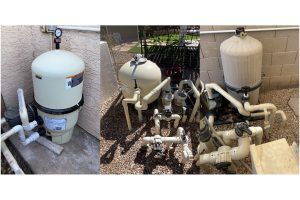
The most visible sign of hard water is scaling, a white or grayish crust that forms along your waterline, on tile, and on the pool surface. It feels rough and chalky and it’s stubborn to remove once it sets in. Left unchecked, scale builds up inside your plumbing and equipment too, restricting flow and making your pump and heater work harder.
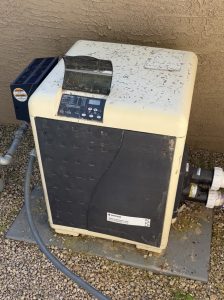
Hard water is especially tough on heaters and salt chlorine generators. Calcium builds up on the heating elements and generator cells, reducing their efficiency and shortening their lifespan. Cloudy water is another common symptom, since excess calcium can prevent water from staying clear even when your other chemistry is balanced.
How to keep it under control
The good news is hard water is manageable with consistent attention. The most important habit is regular water testing. Calcium hardness should generally sit between 200 and 400 ppm for most Arizona pools. Testing regularly lets you catch problems before they turn into buildup you can see and feel.
Keeping the rest of your water chemistry balanced matters too. When pH, alkalinity, and calcium are all in range, minerals are far less likely to deposit out onto your surfaces. A sequestering agent can also help by binding to minerals and keeping them dissolved in the water rather than forming scale.
When mineral levels climb too high to manage with chemistry alone, the fix is partially draining and refilling the pool with fresh water to dilute the concentration. In Arizona, where evaporation constantly concentrates minerals, most pools need this done periodically. A pool professional can tell you when it’s time and how much to replace.
Don’t try to remove heavy scale yourself
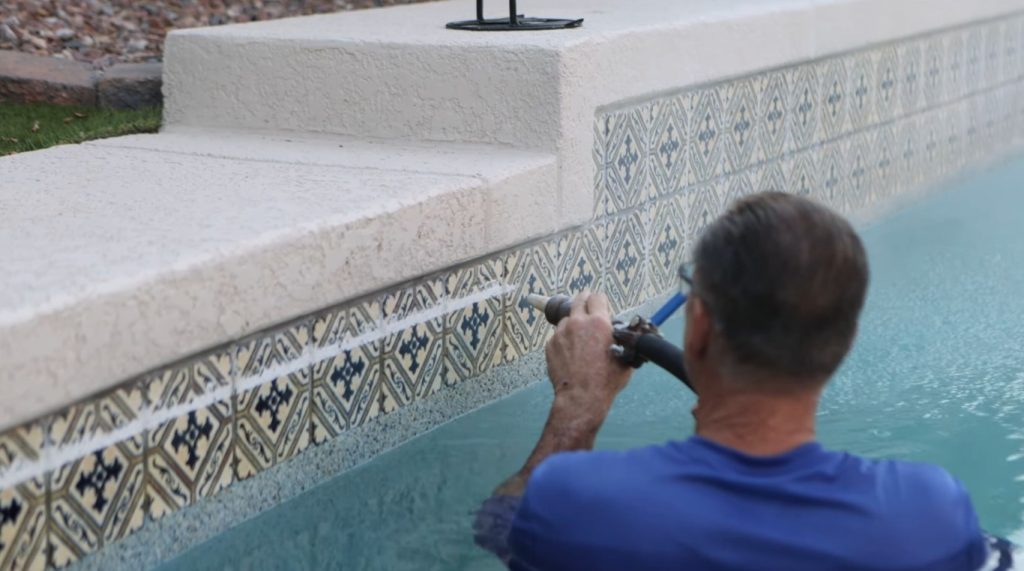
Once scale has hardened onto tile or plaster, removing it takes the right tools and technique. Aggressive scrubbing or the wrong acid treatment can permanently damage your surfaces. Bead blasting and professional descaling are the safe ways to handle heavy buildup.
Hard water is just part of owning a pool in Arizona, but with the right maintenance it doesn’t have to damage your investment. If you’re seeing scale, cloudy water, or buildup on your equipment, Arizona’s Best Pool Service can test your water, get your chemistry back in balance, and handle any descaling that’s needed. Give us a call or text at (602) 854-8233.