Your pool filter is doing a lot of quiet work in the background. It catches debris, oils, bacteria, and fine particles that your pump pushes through, keeping the water clear and safe to swim in. When it starts to struggle, you’ll usually notice it in your water before you notice it in the equipment. Here’s how to read the signs.
Arizona pools deal with a unique combination of dust, hard water minerals, and heavy summer use that clogs filters faster than most other climates. Staying on top of your filter is one of the easiest ways to protect your equipment and keep your water looking good year round.
Signs your filter needs cleaning
The most reliable indicator is your pressure gauge. Every filter has a normal operating pressure range, usually noted when the filter is first installed or after a fresh clean. When the pressure climbs 8 to 10 PSI above that baseline, it’s time to clean. High pressure means water is being forced through a restricted filter, which puts extra strain on your pump and reduces circulation.
Other signs include cloudy or dull water that doesn’t clear up despite balanced chemistry, reduced water flow from your return jets, and debris making it back into the pool after running the system. If your pool looks off and your chemicals are fine, the filter is usually the next place to look.
Cleaning frequency by filter type
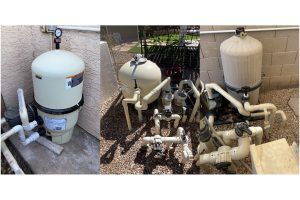
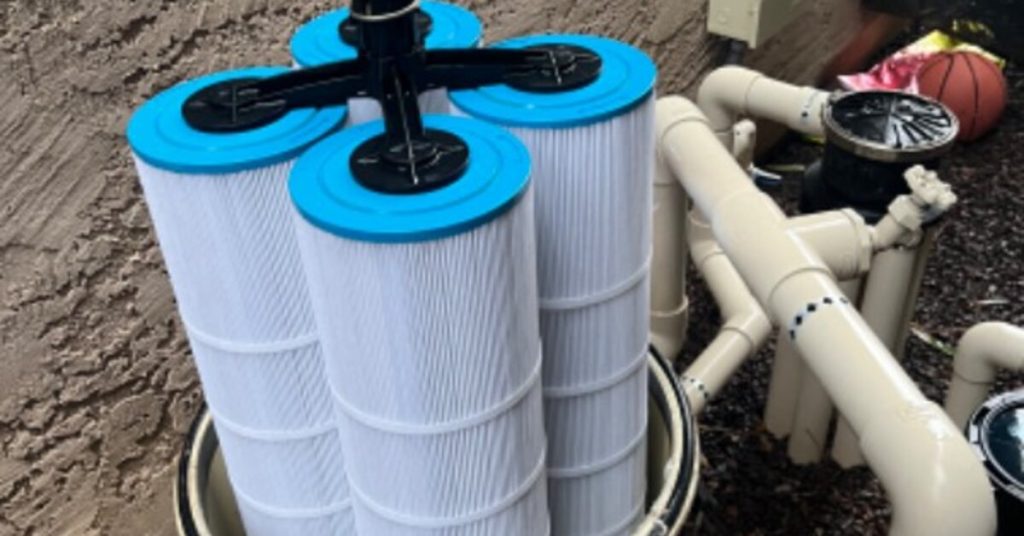
How often you clean depends on what kind of filter you have. Sand filters typically need backwashing every 4 to 6 weeks during swim season, more often after a haboob or heavy use. DE filters should be backwashed when pressure rises and given a full breakdown and clean once or twice a year. Cartridge filters need to be removed and rinsed every 4 to 6 weeks, with a deep chemical soak a few times per year to break down oils and mineral buildup.
In Arizona, hard water calcium deposits build up on filter media faster than in softer water climates. If you have a cartridge filter, a regular soak in a filter cleaning solution helps dissolve that buildup and extends the life of the cartridge significantly.
Signs your filter needs replacing
Cleaning can only do so much. If you’re noticing any of the following, it may be time to replace the filter media or the unit altogether.
Cartridge filters with torn, frayed, or collapsed pleats can no longer filter effectively and need to be replaced. Most cartridges last 1 to 3 years depending on usage and water conditions. If yours is cleaning up quickly after being washed or the pleats are visibly damaged, it’s done.
With sand filters, the sand itself breaks down over time and loses its ability to trap fine particles. If your water stays cloudy even after a fresh backwash and balanced chemistry, the sand may need replacing, which is typically every 5 to 7 years. DE filters with cracked grids or a torn manifold will push DE powder back into the pool, which is a clear sign something needs to be replaced inside the tank.
If the tank itself is cracked or the multiport valve is leaking and can’t be repaired, a full replacement is usually the most cost-effective path forward.
When in doubt, check the pressure gauge
Make a habit of noting your filter’s clean operating pressure after each service. That number becomes your baseline. When pressure rises significantly above it, you know it’s time to act before the problem shows up in your water.
If you’re not sure what shape your filter is in or when it was last serviced, Arizona’s Best Pool Service can take a look and give you a straight answer. We service all filter types across the Phoenix valley and can handle cleaning, media replacement, or a full upgrade if it’s time. Give us a call or text at (602) 854-8233.