Your pool pump is the heart of your pool. When it starts to fail, water quality drops, equipment strains, and repair bills climb. Here’s how to spot the warning signs before a small problem turns into a costly emergency.
In Phoenix, pool pumps work harder than almost anywhere else in the country. UV exposure, extreme temperatures, and near-constant use accelerate wear and tear, so Arizona homeowners need to stay especially vigilant.
1. Unusual or loud noises
A healthy pool pump runs quietly in the background. If you’re suddenly hearing grinding, screeching, rattling, or a deep hum that wasn’t there before, pay attention. These sounds usually point to worn bearings, a damaged impeller, or a motor that’s struggling to turn. Ignoring them can lead to a seized motor and a much bigger bill.
2. Loss of suction or poor circulation
If your pool water looks dull or cloudy even after a cleaning, weak pump suction is often the culprit. A failing pump can’t move water effectively through the filter and chemical system, which means debris builds up and sanitizers don’t distribute evenly. Check your pump basket first, but if it’s clear and you’re still seeing poor flow, the pump itself may be on its way out.
3. The motor runs but nothing happens
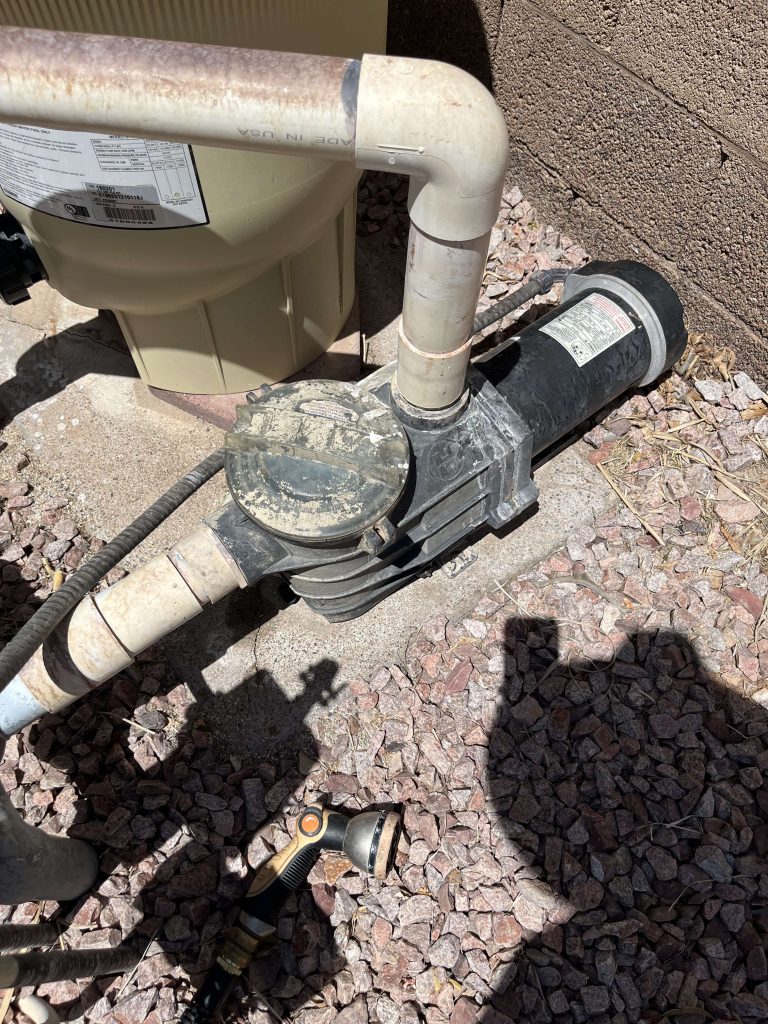
Hear the motor humming but see no water moving? This is a classic sign of a dead impeller, the part that actually spins water through the pump housing. Debris clogs and calcium buildup are very common in Arizona’s hard water. In some cases the impeller can be cleared or replaced, but if the motor or shaft is damaged, a full replacement is often the smarter long-term investment.
4. Leaks around the pump housing
Water pooling around the base of your pump is never a good sign. Leaks can come from a worn shaft seal, a cracked housing, or failed O-rings. Small leaks reduce pressure, allow air into the system, and can damage the motor if left alone. If the housing itself is cracked, replacement is typically the only fix.
5. The pump is over 8 to 10 years old
Even a well-maintained pump has a lifespan. In Arizona’s climate, that’s typically 8 to 10 years. If your pump is approaching that mark, you’re likely dealing with reduced energy efficiency and aging components that are increasingly hard to source. Upgrading to a modern variable-speed pump can cut your energy costs significantly, often paying for itself within a couple of years.
Repair or replace?
A good rule of thumb: if the repair cost is more than 50% of the price of a new pump, especially on a unit that’s 7 or more years old, replacement is usually the smarter call. You’ll get better efficiency, a warranty, and peace of mind.
When to call a professional
Basic maintenance like cleaning the strainer basket is something most homeowners can handle. But diagnosing and replacing a pool pump involves electrical connections, plumbing, and precise pressure balancing. Getting it wrong can cause water damage or void equipment warranties. A licensed pool technician can quickly tell you whether you need a repair, a part replacement, or a full pump upgrade.
If you’re seeing any of these signs, don’t wait until your pump fails completely. Arizona’s Best Pool Service has been diagnosing and replacing pool pumps across the Phoenix valley for over 20 years. Give us a call or text at (602) 854-8233 and we’ll get your pool back in shape.