It’s one of the most common questions we get from homeowners thinking about a new pool or upgrading their existing setup. Both systems keep your water clean and safe, but they work differently and come with different trade-offs. Here’s an honest breakdown to help you decide what makes sense for your situation.
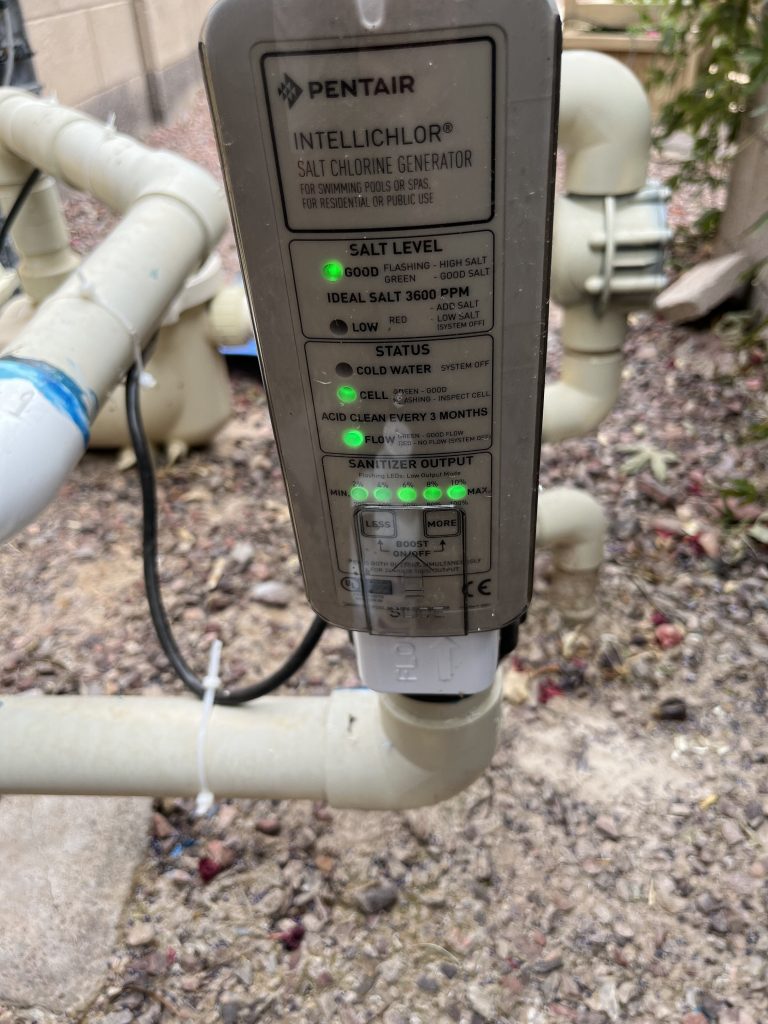
One thing worth clearing up right away: salt water pools still use chlorine. The difference is that instead of adding chlorine manually, a salt chlorine generator converts dissolved salt into chlorine automatically. So you’re not choosing between chlorine and no chlorine, you’re choosing how that chlorine gets produced.
The case for salt water
Salt water pools tend to feel better to swim in. The water is softer on skin and eyes, which is a noticeable difference especially for families with young kids or anyone sensitive to traditional chlorine. You also spend less time managing chemicals week to week since the generator handles chlorine production on its own.
Over time, you’ll save money on chlorine products since you’re buying salt instead, which is significantly cheaper. For many homeowners, the day-to-day convenience alone makes it worth the switch.
The Arizona catch with salt water
Here’s where things get more complicated for Phoenix-area homeowners. Our extreme heat puts extra strain on salt chlorine generators. When water temperatures push above 95 degrees, which happens regularly during an Arizona summer, generators have to work harder and can wear out faster than they would in a milder climate.
Arizona also has very hard water, and high calcium levels can cause scaling on the generator cell over time. That scaling reduces efficiency and shortens the lifespan of the cell, which typically needs replacing every 3 to 5 years at a cost of $500 to $900. It’s not a dealbreaker, but it’s a maintenance cost worth factoring in.
Salt can also be corrosive to certain pool materials. If your pool has metal fixtures, a stone deck, or older plaster, you’ll want a professional to assess compatibility before converting.
The case for traditional chlorine
A traditional chlorine pool is simpler and cheaper to set up. There’s no generator to install or maintain, and when something goes wrong it’s usually a straightforward fix. Chlorine also gives you more direct control over your sanitizer levels, which some pool owners prefer, especially if they’ve had water quality issues in the past.
The downside is the ongoing cost and effort of buying and adding chlorine products regularly. During Arizona summers when your pool is getting heavy use and baking in direct sun, you may find yourself adding chlorine more often than you’d like.
So which one should you choose?
For most Arizona homeowners who want lower maintenance and a more comfortable swim, salt water is a great option, as long as you go in with realistic expectations about the heat and hard water factors. If you’re on a tighter budget or have an older pool with materials that don’t play well with salt, a well-managed traditional chlorine system works just fine.
The honest answer is that neither system is universally better. It comes down to your pool, your budget, and how hands-on you want to be with maintenance.
Thinking about converting?
Converting from chlorine to salt water isn’t something you want to DIY. The installation needs to be sized correctly for your pool volume, and your existing equipment and surfaces should be checked for compatibility first. Done right, it’s a smooth upgrade. Done wrong, it can cause damage that costs more to fix than the conversion itself.
If you’re weighing the options and want a straight answer based on your specific pool, give Arizona’s Best Pool Service a call or text at (602) 854-8233. We’ve done hundreds of conversions across the valley and can tell you quickly whether it’s the right move for your setup.