Phoenix pool maintenance does not follow the national pool calendar. Nobody here closes a pool in October, and nobody gets a break in July. The work changes shape four times a year instead: winter is about pump hours, chemistry drift and a few freeze nights; spring is algae and palo verde blossoms; summer is chlorine demand and evaporation; monsoon is dust. This Phoenix pool maintenance guide walks through the 12 steps that matter, season by season, with the numbers behind each one. If you would rather hand the whole list to someone, the last section explains what a weekly Phoenix pool maintenance service covers and how pricing works.
Why Phoenix pool maintenance is different
Three things make a Valley pool harder to keep than a pool almost anywhere else.
Hard water. The City of Phoenix’s 2025 water quality report puts tap-water hardness at 172 to 302 ppm, which is 10 to 17.6 grains per gallon. Every gallon of fill water carries that calcium in, and evaporation leaves it behind. That is the white line on your tile and the scale on your salt cell. Our post on how Arizona’s hard water affects your pool covers the chemistry. The short version: calcium only goes up until you drain.
Evaporation. In summer a 400-square-foot pool loses about 10 inches of water a month, roughly 2,500 gallons, according to the Arizona Municipal Water Users Association. Your autofill runs all the time, and so does the calcium clock.
Heat and sun. Sky Harbor logged 122 days at or above 100°F in 2025, per the National Weather Service. Warm water and hard UV burn through chlorine faster than almost anywhere in the country, which is why stabilizer levels and pump run times matter more here than they do in most places.
Add monsoon dust and a pool that never gets a closed season, and you have a job that rewards steady weekly Phoenix pool maintenance far more than heroic catch-up weekends.
Phoenix pool maintenance in winter (November to February)
Valley pool water drops into the 50s by December. Algae slows down, chlorine lasts longer, and most owners can ease off the Phoenix pool maintenance routine. Ease off, not stop.
1. Cut pump run time, but keep one full turnover
Salt River Project recommends running the pump 8 to 12 hours a day in summer and 6 to 8 hours in winter. Set the timer for daylight hours, and do not drop below six: the pump is also your freeze protection (step 3). If you have a variable-speed pump, winter is when the low-speed savings show up on the bill. Our comparison of variable-speed and single-speed pumps has the math.
2. Keep testing every week
Chlorine demand falls, but pH and calcium keep drifting. The CDC’s targets apply year-round: pH 7.0 to 7.8 and at least 1 ppm free chlorine, or at least 2 ppm if you use stabilized tablets.
Two winter traps catch people every year. Salt chlorine generators stop producing once the water falls into the low 50s, so a salt pool needs liquid chlorine or tablets added by hand until March. And winter rain is rare, so nothing dilutes the calcium or stabilizer that built up over summer. This is the part of Phoenix pool maintenance that gets skipped in January and paid for in March.
3. Plan for the three or four freeze nights
Sky Harbor averages fewer than one night a year at or below 32°F, but the north Valley sits higher and colder. Anthem, New River and Desert Hills, Cave Creek and Carefree and north Scottsdale get freeze warnings most winters. On those nights run the pump all night, or make sure your automation’s freeze protection is switched on; most systems trigger between 36 and 38°F.
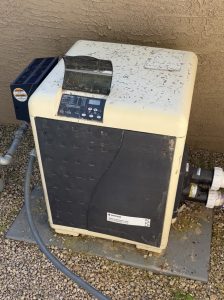
Moving water does not freeze in the pipes. Still water in a heater or filter can crack one. If you run a heater, our Phoenix pool heater guide covers startup and the usual reasons it will not fire.
4. Book repairs and upgrades now
Cool water and open schedules make winter the season for filter teardowns, salt cell inspections, tile calcium removal and pump or heater replacement. Pool equipment repair and new equipment installation are both easier to schedule between November and February, and a pump that is struggling now will not survive June. Here are the five signs your pool pump needs replacing.
Do you still need weekly service in winter? Chemistry drifts whether or not anyone swims, and the February warm-up is when a neglected pool turns green. A sensible middle ground is to step down to a chemicals-only plan for a few months rather than cancel; the weekly pool cleaning packages page shows the three options.
Phoenix pool maintenance in spring (March to May)
5. Get ahead of the first algae bloom
Once water passes about 65°F, usually in March, algae wakes up before most owners do. Raise free chlorine toward the top of the range, brush walls and steps twice a week, and pay attention to corners and steps where circulation is weak. The spring half of Phoenix pool maintenance is mostly brushing. If the water goes cloudy anyway, our guide to cloudy pool water walks through the fix.
6. Fight the palo verde bloom
April and May bring palo verde and mesquite blossoms that fill a skimmer basket in a day, plus spring winds that bring the dust early. Empty the baskets every day or two, and watch filter pressure: clean the filter when it reads 8 to 10 psi above its clean baseline. Our post on when a pool filter needs cleaning or replacing shows what to look for. A cartridge that was borderline in winter will choke in April.
7. Check stabilizer before the heat arrives
Stabilizer (cyanuric acid) protects chlorine from sunlight, and every chlorine tablet adds more of it. Most technicians want it between 30 and 50 ppm. Above about 90 ppm chlorine stops working well, and the only fix is a partial drain. Spring is the last comfortable window to do that: cool water, and no sun baking an empty plaster shell. Phoenix and most Valley cities require pool water to go into the sanitary sewer cleanout, not the street, so check your city’s rule before you pull the plug. How often? Typically every three to five years in Arizona, once calcium, stabilizer and total dissolved solids have all climbed past where chemicals can help.
Phoenix pool maintenance in summer (June to September)
8. Run the pump 8 to 12 hours and test twice a week
Back to SRP’s summer range. Chlorine demand can triple between April and July as water temperatures pass 85°F and swimmers add load, so an owner doing it alone should test at least twice a week and expect to add chlorine after every weekend. Keep stabilizer in range, or that chlorine is gone by noon. Summer is where Phoenix pool maintenance earns its reputation.
9. Manage water level and evaporation
Ten inches of evaporation a month means the autofill runs constantly. Keep the water at the midpoint of the skimmer opening: too low and the pump pulls air, too high and the skimmer stops skimming. Every inch of fill water adds calcium, so weekly tile brushing is the Phoenix pool maintenance step that keeps scale from setting hard.
10. Keep the filter clean and the water moving
Hot water plus phosphates from dust and landscaping equals algae pressure all summer. Brush weekly, vacuum the floor, aim the returns so the whole pool circulates, and clean the filter on pressure, not on the calendar. This is also when weak pumps and tired filters fail. If you are choosing a replacement, start with the three types of pool filters for Phoenix pools.
Phoenix pool maintenance during monsoon (June 15 to September 30)
11. After a dust storm, act the same day
A haboob can drop a season’s worth of dust into a pool in 20 minutes. Skim, empty both baskets, brush, vacuum and test the same day or the next morning. Expect to add chlorine, and if the water is cloudy, shock it and run the pump for 24 hours. Clean the filter afterward, because the dust is in it now.
Waiting for the regular service day is how a cloudy pool becomes a green one. This is the one part of Phoenix pool maintenance where waiting costs the most. In Peoria and Surprise, where the dust is worst, our weekly visits after a storm start with extra brushing and vacuuming.
12. Check the equipment pad after every storm
Rain raises the water level, so drain back down to the skimmer midpoint. Lightning and power outages reset timers and automation, so confirm the pump is running on schedule and primed. Make sure the filter pressure gauge still reads and nothing is wedged in the pump basket. Rain also dilutes stabilizer and salt a little, so test within a day or two. Our fall pool care checklist picks up where monsoon leaves off.
What a Phoenix pool maintenance service covers
If you would rather not own this list, here is what a weekly Full-Service visit from AZ’s Best includes:
- Water tested and balanced, chemicals included (salt level and cell checked on saltwater pools)
- Skimming, with the skimmer and pump baskets emptied
- Walls, steps and tile line brushed, floor vacuumed
- An equipment check of the pump, filter, heater, salt cell and automation
- A service report after every visit with your chemical readings, before-and-after photos and notes on anything that needs attention
The Basic plan covers weekly testing and chemicals only. Plus adds brushing and skimming. The weekly pool cleaning packages page compares all three, and how often you should service your pool in Phoenix explains why weekly is the right interval here.
A Phoenix pool maintenance service is priced as a flat monthly rate, confirmed after a free visit. AZ’s Best has been owner-run by Jerry Theobald since 2002, is licensed, bonded and insured (AZ ROC 328190), and holds Pentair, Hayward and Jandy installer certifications.
Weekly routes cover Phoenix, North Phoenix and Desert Ridge, Scottsdale, North Scottsdale, Paradise Valley, Peoria, Glendale, Surprise, Goodyear, Cave Creek and Carefree and Anthem, New River and Desert Hills.
Military members and first responders get 10% off, and every plan carries a 100% satisfaction guarantee. Call or text (602) 854-8233, or start a free estimate.
Phoenix pool maintenance FAQ
How much is pool maintenance in Phoenix?
Weekly Phoenix pool maintenance is sold as a flat monthly rate. The rate depends on pool size, equipment, whether it is a saltwater pool, and how much of the work you want done for you: chemicals only, chemicals plus brushing and skimming, or full service. We confirm the number after a free visit, chemicals are included, and there are no add-on charges for them.
How often should you change pool water in Arizona?
Typically every three to five years. The signs are calcium hardness and stabilizer that chemicals can no longer bring down, and total dissolved solids that make the water feel flat and hard to balance. Drain in the cool months, never in summer, and send the water to the sanitary sewer cleanout as your city requires.
Are pools open in Arizona in December? Do you winterize?
Arizona pools stay open all year and are never winterized the way northern pools are. Winter care means fewer pump hours, weekly testing, chlorine added by hand on salt pools, and running the pump through the handful of freeze nights. Phoenix pool maintenance never stops. It just gets lighter.
What chlorine and pH levels should a Phoenix pool have?
The CDC recommends pH 7.0 to 7.8 and at least 1 ppm free chlorine, or at least 2 ppm when stabilizer is in the water, which it is in nearly every Phoenix pool. In summer most technicians run free chlorine toward the upper end of the safe range because heat and sun consume it so quickly.
How many hours a day should a pool pump run in Phoenix?
For Phoenix pool maintenance, Salt River Project’s guidance is 8 to 12 hours a day in summer and 6 to 8 hours in winter. Run it longer for a day or two after a dust storm, and all night when a freeze is forecast.
Do I need weekly pool service in the winter?
The water still needs testing and balancing every week, because calcium, pH and stabilizer drift whether or not anyone swims. Many owners step down to a chemicals-only plan from December to February and return to full service in March, when algae season starts. Cancelling outright usually means a green pool and a chemical bill in spring that costs more than the winter visits would have.